Spalling concrete, often recognized by unappealing flaking, pitting, or chunking of the surface, is far more than a cosmetic eyesore for property owners. When the surface layer of a slab begins to peel away, it signals that the internal chemistry of the structure is under attack from environmental forces.
Ignoring these early signs of deterioration can lead to a rapid decline in the structural integrity of your driveways, sidewalks, or foundations. Addressing the issue immediately with a professional contractor prevents a minor surface fix from escalating into a full-scale demolition and replacement project.
The Exposure of Internal Reinforcement
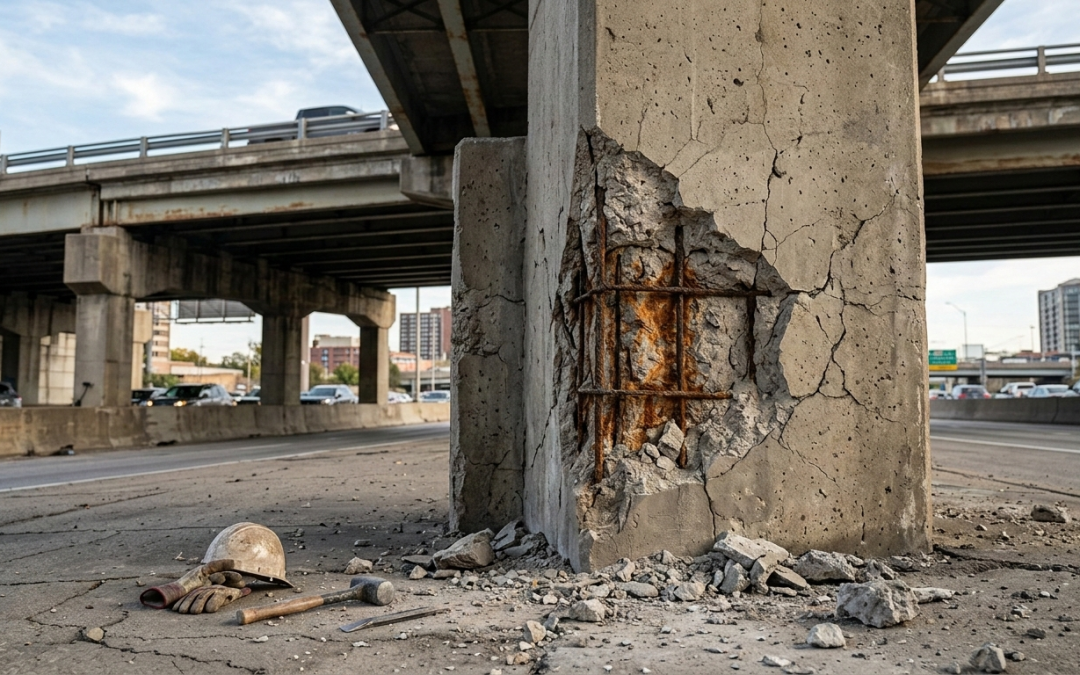
When the outer layer of concrete flakes off, it leaves the underlying steel reinforcement, known as rebar, vulnerable to the elements. Without the protective alkaline environment of the concrete cover, the steel begins to oxidize and weaken.
- Oxygen and Moisture Ingress: Open pits allow rain and humidity to reach the metal core directly.
- Oxidation Expansion: As rebar rusts, it expands up to seven times its original size, creating internal pressure.
- Structural Fracturing: This internal expansion forces more concrete to pop off, accelerating the cycle of decay.
- Loss of Load Capacity: Rusted steel loses the tensile strength required to hold heavy loads safely.
Once the rebar is visible, the “clock is ticking” on the health of the entire slab. A repair contractor must treat the metal and patch the area to stop the oxidation process before the steel snaps or thins out.
Hazards to Pedestrian Safety
Spalling creates uneven surfaces that are notorious for causing trips and falls on residential and commercial properties. These jagged edges and loose debris make it nearly impossible to maintain a safe walking environment for family or customers.
- Trip Hazards: Abrupt changes in surface height can catch the toe of a shoe or a cane.
- Loose Debris: Small chunks of concrete act like ball bearings underfoot, leading to slips.
- Liability Issues: Property owners can be held legally responsible for injuries caused by poorly maintained walkways.
- ADA Non-Compliance: Significant spalling can make a path inaccessible for wheelchairs and strollers.
Proactive repairs eliminate these physical risks and protect you from potential legal complications. Ensuring a smooth, level surface is the most basic requirement for any functional outdoor living or transit space.
The Freeze-Thaw Cycle Acceleration
In regions with fluctuating temperatures, spalled areas act like sponges that trap water during the day. When that water turns to ice at night, the expansion forces the cracks to widen and the “scales” of concrete to grow larger.
- Capillary Action: Water is pulled deeper into the concrete through the exposed pores of the spalled area.
- Ice Pressure: The 9% volume expansion of freezing water exerts thousands of pounds of pressure per square inch.
- De-icing Salt Damage: Exposed concrete is more susceptible to chemical erosion from salts used in the winter.
- Deep Seepage: Moisture can eventually reach the sub-base, causing the ground underneath to shift or sink.
This seasonal movement can turn a small patch of flaking into a giant pothole in just one winter. A contractor can apply specialized overlays and sealants to “waterproof” the area and break this destructive cycle.
Decreased Property Value and Curb Appeal
First impressions matter, and crumbling concrete sends a message of neglect to neighbors, guests, or potential buyers. Spalling is often perceived as a sign that the entire property has been poorly maintained, which can significantly drive down market value.
- Aesthetic Blight: Discolored and pitted concrete looks dirty and aged, regardless of how well you landscape.
- Buyer Red Flags: Home inspectors always flag spalling as a structural concern, which can kill a real estate deal.
- Commercial Perception: For businesses, a crumbling entryway can deter customers who associate quality with a well-kept facility.
- Resale Obstacles: Repairing the concrete after a failed inspection usually costs more than routine maintenance.
Investing in a professional repair contractor restores the “like-new” look of your masonry. High-quality resurfacing techniques can make old, flaking concrete indistinguishable from a fresh pour at a fraction of the cost.
Prevention of Total Structural Failure
While spalling starts at the surface, it is often a symptom of deeper issues like poor mixing, improper curing, or “carbonation.” If left unaddressed, these issues will eventually travel through the entire thickness of the concrete, leading to a total collapse.
- Contamination Spread: Salt and chemicals migrate through the slab more easily once the surface “skin” is gone.
- Loss of Concrete Mass: As more material flakes away, the slab becomes thinner and less capable of supporting weight.
- Subgrade Erosion: Large gaps allow water to wash away the dirt underneath, leading to hollow spots and “sinking.”
- Irreversible Damage: There is a point of no return where a patch will no longer bond, requiring a total teardown.
A repair contractor can perform a “sounding test” to determine if the damage is localized or systemic. Catching the problem while it is still in the spalling phase allows for a surgical repair rather than a complete site overhaul.
Protecting Your Foundation and Your Finances
Treating spalling as a minor cosmetic issue is a mistake that often leads to thousands of dollars in unnecessary replacement costs. By hiring a concrete repair contractor at the first sign of flaking, you are effectively sealing off your home’s structural “skin” and preventing deep-seated rot.
Taking action today ensures that your concrete remains a solid, safe, and attractive asset for your property. Do not wait for the steel to rust or the cracks to spread—restore your surface now to secure the longevity of your build.