
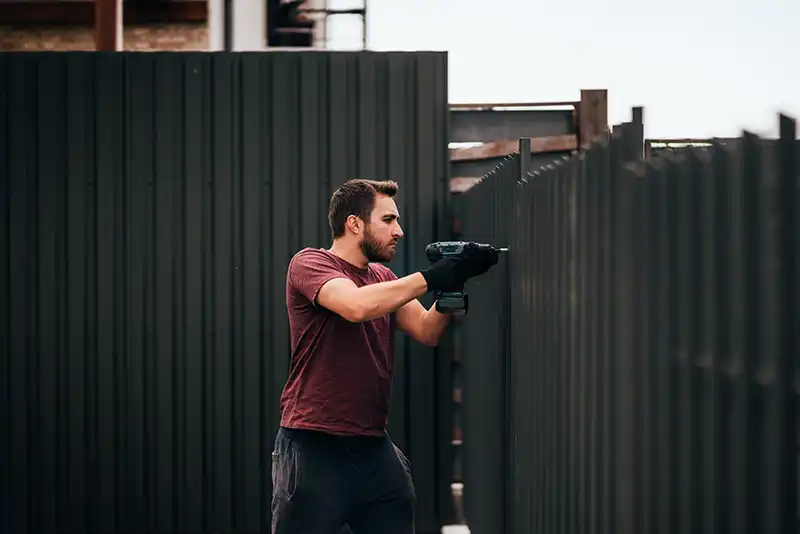
Installing a commercial fence is a critical capital investment that defines property boundaries, protects valuable assets, and enhances perimeter security. Executing the installation process correctly requires systematic planning, precise engineering, and strict compliance with local commercial building codes.
Understanding each phase of the installation journey allows property owners and project managers to streamline construction schedules and avoid costly project delays. Following an established installation process ensures your commercial fence delivers maximum structural integrity and long-term operational performance.
Site Assessment and Property Line Surveying
The installation journey begins with a comprehensive site assessment to establish exact property boundaries and evaluate ground conditions. Identifying potential obstacles such as underground utilities, grade changes, and natural features prevents costly mid-construction adjustments.
- Conduct a certified property survey to locate precise boundary lines and prevent encroachment issues
- Contact local utility locator services to mark all underground electrical, gas, water, and fiber optic lines
- Assess ground slope and soil conditions to determine appropriate post depth and footing requirements
Proper preliminary surveying protects your investment from legal disputes and hazardous utility strikes. Completing thorough site assessments lays a dependable foundation for all subsequent layout and construction activities.
Securing Permits and Code Compliance
Navigating local commercial zoning laws and securing the required municipal permits is essential before breaking ground on any fencing project. Local ordinances dictate specific regulations regarding maximum allowable fence heights, setback distances, material choices, and emergency access requirements.
- Submit detailed engineering plans and property site diagrams to local municipal building departments
- Review municipal regulations for specific height restrictions and mandatory property line setbacks
- Coordinate with local fire departments to verify gate clearances and emergency access compliance
Obtaining official permit approvals prevents project shutdowns, expensive municipal fines, or required teardowns after installation. Ensuring total regulatory compliance keeps your project moving forward smoothly and legally.
Staking, Post Hole Digging, and Footing Placement
Precision post placement forms the structural backbone of any durable commercial fencing system. Installers mark exact post locations using string lines and high-grade stakes, ensuring straight fence lines and uniform panel spacing across the entire perimeter.
- Excavate post holes below the local frost line to prevent ground heave and structural leaning
- Set heavy-duty commercial fence posts in high-strength concrete footings designed for heavy wind loads
- Use commercial transit levels to verify that every post is vertically plumb and aligned before concrete sets
Engineered footings ensure your commercial fence withstands severe weather events and heavy daily use without sagging. Taking time to set posts correctly guarantees total perimeter stability for decades.
Framework and Gate Hardware Assembly
Once concrete footings have cured completely, the installation crew assembles the primary fence framework, including top rails, tension bars, and gate posts. Installing structural support components correctly distributes weight evenly across the entire fence assembly.
- Secure heavy-duty top rails, mid-rails, and corner posts using commercial-grade fittings and hardware
- Hang industrial-grade gate assemblies, ensuring smooth swing or slide operations along track systems
- Integrate automated access control hardware, latching mechanisms, and security locking systems
Assembling strong framework components ensures smooth daily operations for vehicle and pedestrian gates. A well-built framework supports high-tension mesh or heavy panels without warping or binding over time.
Panel Attachment and Final Quality Inspection
The final operational step involves attaching the primary fencing material, whether heavy-gauge chain link mesh, ornamental iron panels, or composite boards. Installers tension mesh or secure panels tightly to the framework to create an impenetrable, visually uniform security barrier.
- Stretch chain link mesh using mechanical winches to achieve tight, sag-free tension along the line
- Fasten panels securely using corrosion-resistant industrial hardware and tamper-proof fittings
- Conduct a comprehensive site walkthrough to inspect hardware tightness, gate operation, and site cleanup
Rigorous tensioning and quality inspections ensure your finished commercial perimeter meets all functional and aesthetic standards. The result is a clean, imposing security structure ready to protect your commercial operations.
Secure Your Commercial Property with Expert Fence Installation
Following a structured, professional installation process transforms your initial commercial fencing plan into a permanent asset that protects your business. By prioritizing thorough site preparation, code compliance, and precise craftsmanship, you safeguard your property and enhance perimeter control.
A professionally installed commercial fence provides lasting peace of mind, operational efficiency, and enhanced security for years to come. Take charge of your property’s security today by planning a thorough, step-by-step commercial fence installation tailored to your facility.