
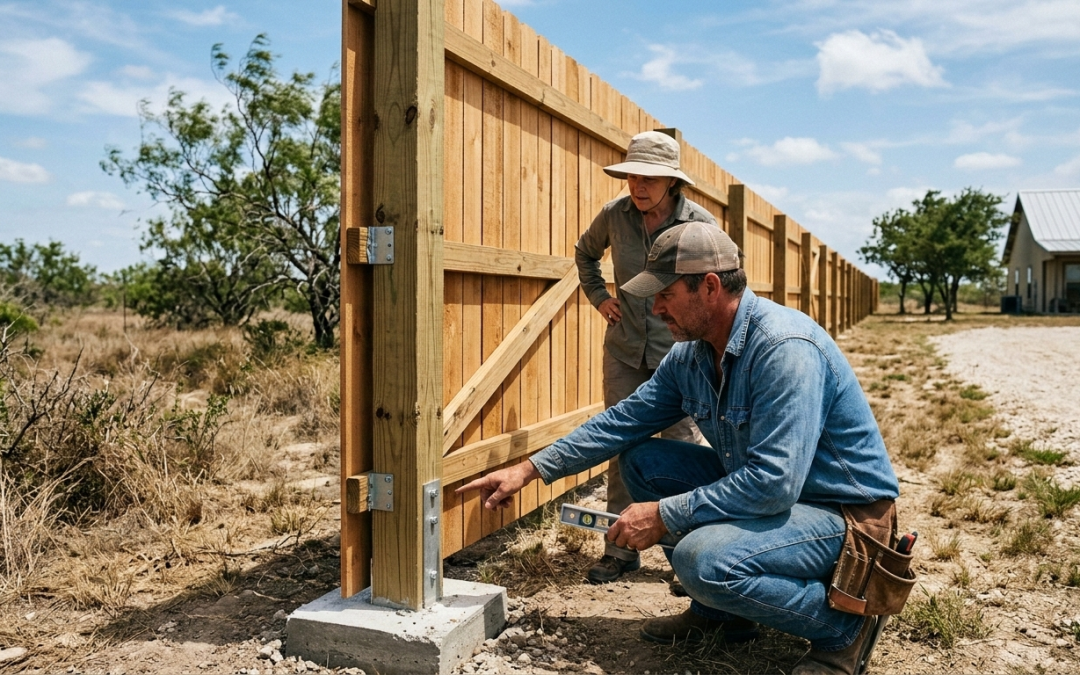
Living in South Texas means preparing for more than just heat; it requires a home exterior that can stand up to sudden tropical depressions and high-velocity windstorms. A standard privacy fence can act like a giant sail during a storm, catching the wind and snapping at the post line if it isn’t engineered for the local climate.
Choosing the right materials and installation techniques is the difference between a fence that lasts twenty years and one that ends up in your neighbor’s yard after a single hurricane season. Homeowners must prioritize structural integrity and aerodynamic design to ensure their investment remains standing when the gusts roll in from the Gulf.
Prioritizing Heavy-Duty Post Materials
The posts are the backbone of any fencing system, and in wind-prone regions, pressure-treated wood often fails where metal excels. South Texas contractors frequently recommend galvanized steel posts, often referred to as “Postmaster” style, because they do not rot or snap under extreme lateral pressure.
- Galvanized Steel: Resists rust in high-humidity coastal air while providing superior shear strength.
- Thicker Gauges: Opting for Schedule 40 steel ensures the pipe won’t bend when the wind catches the fence panels.
- Deep Set Anchoring: Posts should be buried at least 24 to 36 inches deep to leverage the weight of the earth.
- Wood Encapsulation: If you prefer the look of wood, steel posts can be hidden behind cedar trim for a seamless aesthetic.
Steel posts offer a level of flexibility and strength that traditional 4×4 timber simply cannot match during a sustained wind event. By starting with a metal foundation, you eliminate the most common point of failure in residential fencing.
Selecting Wind-Resistant Fence Styles
A solid “board-on-board” fence provides total privacy, but it also creates maximum wind resistance, which can lead to structural collapse. To mitigate this risk, many homeowners choose “shadowbox” or “semi-private” designs that allow air to flow through the pickets without sacrificing too much seclusion.
- Shadowbox Design: Pickets are staggered on both sides of the rail, allowing air gaps that bleed off wind pressure.
- Louvered Pickets: Angled slats provide a visual barrier while directing airflow through the fence line.
- Horizontal Gaps: Small eighth-inch spacings between horizontal slats can significantly reduce the “sail effect.”
- Trellis Toppers: Adding a lattice top allows the strongest winds to pass through the highest, most vulnerable point of the fence.
These “breathable” designs are specifically engineered to equalize pressure on both sides of the fence during a storm. A fence that “breathes” is far more likely to survive a Category 1 hurricane than one that tries to block the wind entirely.
Optimizing Picket Material for Longevity
In the brutal South Texas sun and humidity, pickets can warp or become brittle, making them more likely to shatter or fly off during a storm. Western Red Cedar is the preferred choice for many professionals because of its natural oils and dimensional stability in shifting weather.
- Western Red Cedar: Naturally resists rot and stays straighter than pine when exposed to cycles of rain and heat.
- Vinyl with Internal Reinforcement: High-quality vinyl won’t rot, but it must have aluminum stiffeners in the rails to prevent buckling.
- Composite Durability: Heavy-duty composites offer weight and density that can withstand debris impact during high winds.
- Thicker Picket Profiles: Using 5/8-inch or 3/4-inch pickets prevents the wood from “rattling” and pulling away from the fasteners.
The quality of the wood or synthetic material dictates how well the fence handles the vibration caused by high-velocity air. Cheaper, thin-grade pine pickets often “pop” off their nails long before the posts actually fail.
Engineering Superior Fastening Methods
The way the fence is put together is just as important as the materials themselves, especially when dealing with the vibrations of a windstorm. In South Texas, professional installers move away from standard smooth nails in favor of more secure hardware that won’t pull out under tension.
- Ring-Shank Nails: The “rings” on the shaft act like barbs, making it nearly impossible for wind to pull the picket off the rail.
- Exterior-Grade Screws: Structural screws provide the highest level of grip for gate frames and corner posts.
- Three-Rail Construction: Adding a middle stringer rail provides extra points of contact to keep pickets from bowing.
- Heavy-Duty Brackets: Using steel fence brackets to attach rails to posts prevents the “toenailing” splits that cause failures.
Hardware is often the most overlooked component of a fence build, yet it is usually the first thing to fail. Ensuring every connection point is reinforced with galvanized or stainless steel fasteners will keep your perimeter intact.
Investing in Proper Foundation Footings
A fence is only as strong as the concrete holding it in the ground, particularly in the clay-heavy soils common in South Texas. If the concrete “bell” is too small or the hole is too shallow, the entire fence can tip over like a row of dominoes once the ground becomes saturated with rain.
- Bell-Bottom Piers: Flaring the bottom of the post hole creates a “foot” that prevents the post from being pulled upward.
- High-PSI Concrete: Using a 3000-PSI mix ensures the footer won’t crack under the stress of a swaying post.
- Sufficient Diameter: A hole should be at least three times the width of the post to provide a stable base.
- Proper Drainage Sloping: Mounding the concrete slightly above grade prevents water from pooling and rotting the base of the post.
In a storm, the wind exerts “uplift” and “lateral” forces that try to yank the fence out of the earth. A robust concrete footing acts as an anchor that keeps your property line exactly where it belongs.
Securing Your Property Against the Elements
Building a fence in South Texas is an exercise in engineering for the “worst-case scenario” rather than just the sunny days. By selecting aerodynamic designs, utilizing steel reinforcements, and insisting on professional-grade hardware, you create a barrier that protects your privacy without becoming a liability during hurricane season.
A wind-resistant fence is a long-term investment that saves you from the cycle of constant repairs and premature replacement. Take the time to build for the storms today, and you can enjoy the peace of your backyard with total confidence tomorrow.