A residential or commercial fence serves as the primary line of defense for your property, providing both security and a clear boundary. When a fence begins to fail, it is rarely just a cosmetic issue; it often represents a direct threat to the safety of your family, pets, and assets.
Ignoring the early warning signs of a structural breakdown can lead to total collapse during the next minor windstorm or heavy rain. Identifying the specific moments when a “quick fix” is no longer enough allows you to contact a repair professional before a small problem becomes a costly replacement.
Severe Structural Leaning and Foundation Failure
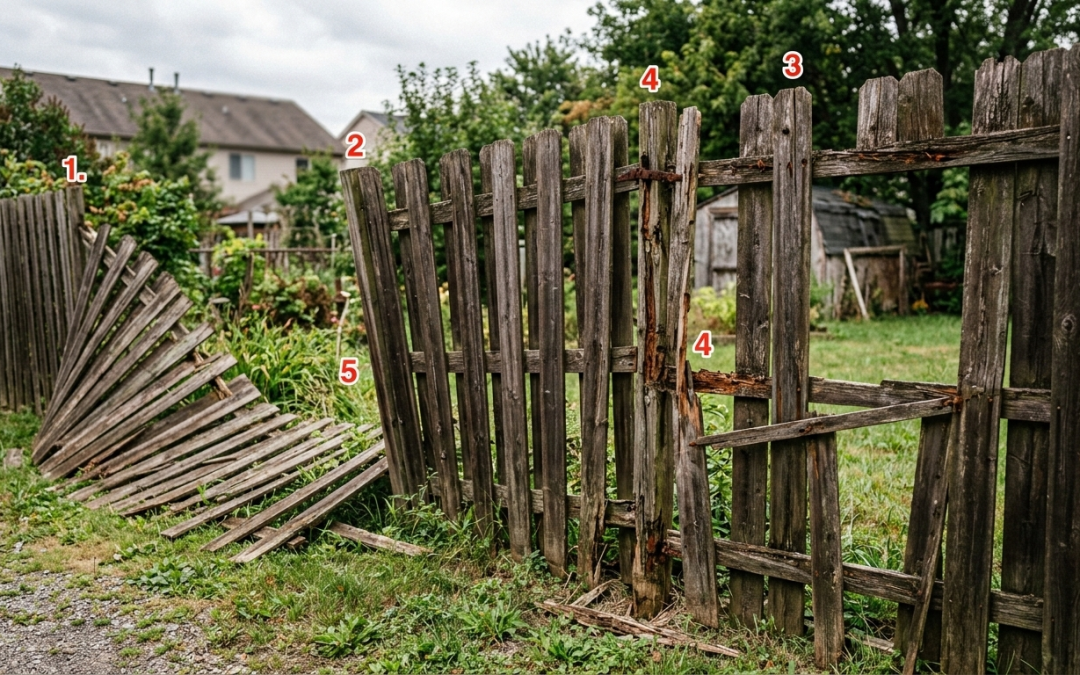
If your fence line looks more like a wave than a straight edge, you are likely dealing with a catastrophic failure of the post footings. This usually occurs when the concrete anchors have cracked or the soil has eroded to the point where the fence can no longer support its own weight.
- Disconnected Footings: Check if the concrete “ball” at the base of the post has pulled out of the ground.
- Plumb Line Deviations: Use a level to see if the lean is increasing week by week, indicating a slow-motion collapse.
- Soil Saturation Issues: Look for pooling water around the base, which softens the earth and allows the wind to push the fence over.
- Heaving Posts: In some climates, the ground pushes the post upward, detaching it from the lateral rails.
A leaning fence is a high-risk liability that can fall on pedestrians or vehicles without warning. An emergency contractor can often “straighten and brace” these sections using deeper steel reinforcements before the entire run of the fence is lost.
Compromised Gate Latches and Sagging Hinges
The gate is the only moving part of your fence and is usually the first component to fail under heavy use. If a gate cannot close securely or stay locked, your property is effectively wide open to intruders, stray animals, or wandering toddlers.
- Latch Misalignment: When the gate frame sags, the locking mechanism will no longer line up with the strike plate.
- Hinge Stress Cracks: Look for bent metal or wood splitting where the heavy gate hangs from the main post.
- Ground Dragging: A gate that scrapes the dirt or pavement puts immense torque on the fence posts, pulling them out of alignment.
- Spring Failure: For self-closing gates required by pool codes, a broken spring is a major legal and safety violation.
A non-functional gate negates the entire purpose of having a fence in the first place. Quick intervention prevents the gate from tearing away from the post entirely and causing a much larger structural headache.
Advanced Rot and Termite Infestation
Wood fences are susceptible to organic decay, but “dry rot” and termite damage can hollow out a post or rail in a matter of months. If you can poke a screwdriver into the wood and it feels soft or spongy, the structural integrity of that section is non-existent.
- Base Rot: Check the bottom six inches of the posts where they meet the soil, as this is the most common point of decay.
- Termite Tunnels: Look for mud tubes or “sawdust” piles near the base of the wood.
- Fungal Growth: Mushrooms or green moss growing directly on the timber indicate that the wood is holding far too much moisture.
- Structural Pitting: Small holes or “honeycombing” in the wood suggest that the fibers are being eaten from the inside out.
Once rot takes hold of a load-bearing post, that section of the fence is essentially a sail waiting for a gust of wind to snap it. Replacing these compromised sections immediately prevents the rot from spreading to the healthy panels nearby.
Missing Pickets and Gaps in the Perimeter
While a few loose boards might seem like a minor nuisance, missing pickets create “wind tunnels” that put uneven pressure on the rest of the fence. Furthermore, these gaps provide an invitation for neighborhood dogs or wildlife to enter your yard and cause further damage.
- Hardware Failure: Rusted nails or screws that have “popped” out leave the pickets dangling or completely detached.
- Warping and Shrinkage: Intense sun can cause wood to twist so severely that it pulls away from the horizontal rails.
- Impact Damage: Fallen branches or vehicle bumps can shatter sections of vinyl or wood, leaving jagged edges.
- Section Separation: Look for gaps where the horizontal rails have pulled completely away from the vertical posts.
An open gap is a “weak link” that allows wind to get behind the fence panels and pry them off from the inside. Closing these holes quickly maintains the structural tension needed to keep the entire system rigid.
Corrosion and Material Fatigue in Metal Fencing
For chain-link or wrought iron fences, the primary sign of an emergency is deep, orange rust that has eaten through the metal. When the thickness of the metal is compromised, the fence can no longer resist a forced entry or the weight of a leaning tree limb.
- Chain-Link Sagging: If the top rail is bent or the mesh is detached, the fence can be easily climbed or crawled under.
- Weld Failure: On ornamental iron fences, check for snapped welds where the pickets meet the rails.
- Deep Pitting: Surface rust is a cosmetic issue, but deep pits indicate that the metal is becoming brittle and weak.
- Unstable Corner Posts: If the tension bars on a chain-link fence snap, the entire mesh line will go limp and lose its protective value.
Metal fences are often chosen for their strength, but that strength is dependent on the continuity of the material. Once the metal “thins out” due to rust, the fence loses its ability to bounce back from impacts or high winds.
Safeguarding Your Property Today
A fence in disrepair is a ticking clock that eventually leads to property loss, injury, or expensive legal complications. By acting on these five emergency signs, you can secure your perimeter and avoid the astronomical costs associated with a total fence replacement.
Do not wait for the next storm to test the strength of a leaning post or a rotting rail. Addressing these critical failures now ensures that your fence remains a reliable guardian for your home and everything within it.